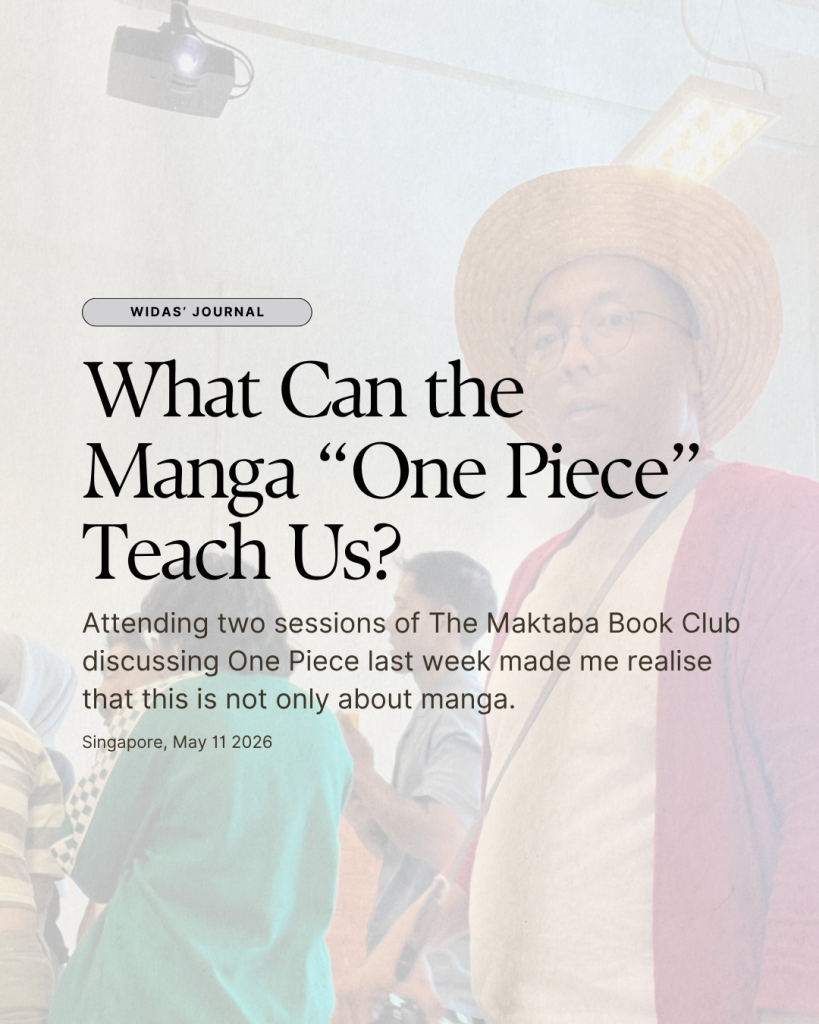
Attending two sessions of The Maktaba Book Club discussing One Piece last week made me realise that this is not only about manga.
My first interaction with One Piece was probably around twenty years ago. Back then, alongside titles like Kungfu Boy, Detective Conan, and Sailor Moon, this Japanese comic often appeared on bookstore shelves in Jakarta.
I used to browse it casually, but never really followed the chapters seriously. To be honest, I was not very into it. The drawings felt strange to me, and the story moved too slowly.
But somehow, this manga has survived for more than 30 years. Its readers span across the world, and many fans deeply connect with the story and its characters.
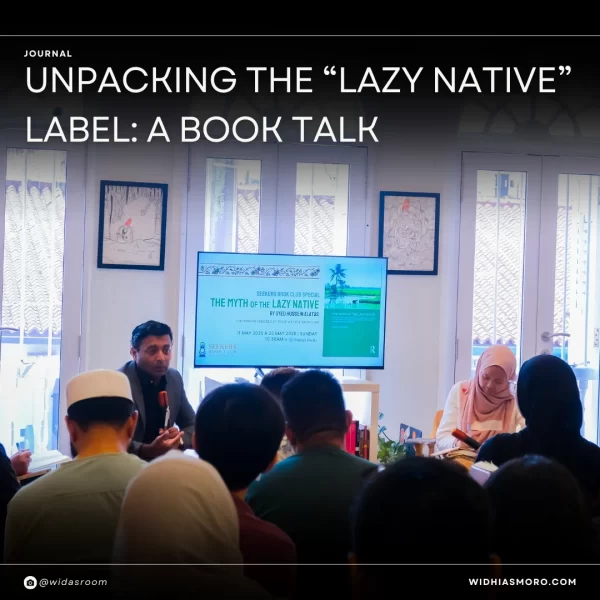
I had the chance to meet some of these passionate readers through a collaboration between The Maktaba Book Club and CAPE, Community for Advocacy and Political Education. They organised two discussion sessions about One Piece, and the conversations surprised me.
The first session explored how One Piece challenges ideas about freedom and authority. One thing we discussed was how the pirate symbol from the manga has appeared in protests and social movements in different countries.
At one point, Indonesia also restricted the display of certain pirate flags associated with the series. Funny, for something that started as a comic about stretchy pirates, somehow entered political conversations around the world.
The second session, held a few weeks later, focused on trauma and discrimination. During the event, the facilitator played a scene from the anime adaptation that unexpectedly made me tear up.
It was the story of a former slave who had become so traumatised that she could no longer cry freely. She kept smiling while carrying deep pain inside. I later learned the character’s name was Koala. I am not a hardcore One Piece fan, so I only discovered this during the session.
What moved me most was not only the scene, but also the discussion afterwards. Each participant shared different interpretations of the story and its characters. Somehow, many of the themes felt painfully familiar to everyday life.
We talked about how symbols are sometimes used to hide resistance movements. How people in power can oppress the weak while convincing society that everything is normal.
There was also discussion about the destruction of knowledge and the burning of books during the Ohara storyline. It sounded fictional, yet at the same time, it reminded many of us of moments from real human history.
That was when I realised that One Piece has become more than entertainment. I can say that the writer, Eiichiro Oda, has an interesting ability to wrap heavy social themes inside absurd characters and funny adventures.
For many people, One Piece has become a language for discussing humanity in a way that feels accessible and emotional.
The stories themselves are not entirely new. History, injustice, greed, loyalty, sacrifice, racial discrimination and hope have always existed. But perhaps every generation needs its own way of retelling them.
Maybe that is the role of literature and storytelling. Not only to entertain us, but also to help us reflect, question ourselves, and become more human.
Sometimes hidayah and wisdom arrive in unexpected forms. Sometimes through books. Sometimes through conversations. And sometimes through a weird character like Luffy.
So, what manga should I check next?